更多服务
更多服务

 报名条件
报名条件
 报名时间
报名时间
 报名费用
报名费用
 免试条件
免试条件
 报名入口
报名入口
 报名流程
报名流程
 报名简章
报名简章
 考试科目
考试科目
 准考证打印
准考证打印
 考试时间
考试时间
 免考政策
免考政策
 机考介绍
机考介绍
 学位介绍
学位介绍
 就业前景
就业前景
 政策福利
政策福利
 考试费用
考试费用
 难度分析
难度分析
 ACCA教材
 国内考点
国内考点
 薪资待遇
薪资待遇
 时间限制
时间限制
 考试教材
考试教材







ACCA P1考试常见问题
来源:
高顿网校
2017-05-11
立即下载2017年ACCA考试*7资料!ACCA考试必备!
Q.Are the professional marks important?
A.Each P1 paper offers 4-6 marks for displaying professional skills,which can easily be the difference between a pass and a fail.The marks are available for both format and the tone and style of your answer,where you may have to prepare a speech or write a letter on behalf of the Board addressing specific concerns.Take a look at the Article of 24 August 2009 for more guidance and some great hints on style.This can be found on MyKaplan or the ACCA website.
Q.Should I attempt the 50 mark case study first?
A.You can attempt questions in any order and it is a personal preference based on the subject matter in each question.My advice is usually to start off with a question you are confident with.The case study covers most of the main syllabus areas and given that it is 50%of the exam I would recommend that this is the first question you should attempt otherwise you will be thinking about it whilst doing the other questions.
Q.Do I need to understand the detailed provisions of the UK Corporate Governance Code to answer questions?
A.The examiner has stated that the only code that will specifically be mentioned in the exam will be Sarbanes Oxley(SOX).The P1 text has included the knowledge required for SOX.The knowledge of other codes is not specifically examinable.However the P1 text is based on the UK Corporate Governance Code e.g.Board of Director’s,NEDS,committees.
Q.I don’t really understand what the question is asking me to do.I understand the syllabus but when it comes to doing questions I get a bit lost?
A.The examiner has highlighted the importance of the verb hierarchy in P1.If you do not understand what a verb means then it is likely that you will go off down the wrong track when writing their answer.The trick is to first identify the number of verbs in the question.E.g.if the Q states‘Identify and explain the risks facing X Ltd and evaluate their impact on the company’then there are 3 things to do in this question:Identify,explain and evaluate.This should be the basic structure for your answer.If all the verbs are not“actioned”then easy marks will be wasted.
Q.What’s the best way to study P1?I read through the text and understand although it is really boring.I then forget what I have read!
A.While we appreciate that it is a relatively dry area,you are advised to“read round the subject”.In class Kaplan tutors attempt to bring the subject alive by using real life examples,such as the failures in internal controls that have caused such disasters as the BP oil spill and the collapse of Barings Bank.You should keep up to date as far as possible with what’s going on in the business world and attempt to relate the syllabus areas to these real life scenarios.
Also,question practice,as ever,is the key to success.Kaplan interim,final assessments and revision mocks are vital revision tools.Reading the examiner’s articles are a must.The fixed tests on MyKaplan are invaluable.
Q.How much do I need to write for a 25 mark question?
A.There is no magic answer here.Again,the key to answering the question is reading the requirement very carefully(REMEMBER RTFQ!–Read the Full Question).If you understand what the verbs are in the question and structure your answers around the verbs,then you will have a higher quality answer.Remember,it’s not how much you write,it’s what you write.In other words it’s quality,not quantity.Make sure that you explain points by referring to the scenario.
Q.How much if at all should I use the scenario in my answers?There seems to be so much to read in the case study.
A.You should always remember that the scenario is there to help,not hinder.Continued question practice prior to the exam will improve your technique in picking the relevant points out the scenario and enhance the quality of your answers.Obviously,knowledge of the syllabus is required.The key to answering the questions is to apply syllabus knowledge to the scenario and(usually)identifying issues in the scenario.e.g.non compliance with good governance requirements.
Q.Is layout important?
A.Yes,layout is vital.P1 is a very wordy paper,and the examiner wants to ensure that you have a good grasp of the theories behind the questions,but also that you can successfully apply the theories to given scenarios.Therefore,it is very easy to get lost within a question if your layout and approach to a question is poor.A good approach is to apply 3 rules in your answer:
Introduction–this should be very short,but can help you get over any‘writers block’.It might include a read back of the question,or a definition of the subject matter(for example,if the question asks for the roles of NED’s,start by very quickly defining what an NED is).
Theory–this section will show the examiner that you actually understand the issue being questioned,again,as with the introduction,this should really be kept short,it can be a section quote from the code,or a reference to an author(Cadbury or Greenbury et al).
Application–This will be the main bulk of your answer and should relate directly to the scenario.This is often the most difficult section of the answer,but should be made easier by the use of the introduction and theory sections.
In addition remember the golden rules of written questions:
Plenty of white space
Headings as required
Short punchy meaningful paragraphs
Q.I don’t like ethics as a subject.Can I avoid it?
A.In short,no.Ethics makes up around 30%of the exam weighting(although it is difficult to be exact).This is generally split between the optional 25 mark question in part B,with some marks appearing in the compulsory case study.So even if you choose not to attempt an ethics-based question in Part B(which by the way,then makes the entire exam compulsory–so let’s hope the other two questions are OK!)it will still likely form a part of question 1.
Disclaimer:ACCA Exam Tips provided from famous tuition providers may be amended to make them easier to understand and read.We try our best to provide everything that is provided to us but we cannot guarantee that this information is 100%accurate.Exam Tips are just intelligent guess and must not be relied totally.Do full preparations of your subject to pass it.
“本文转载自accaexamtips.net,原文链接:http://www.accaexamtips.net/2016/05/acca-P1-frequently-asked-questions-faqs/,再转载请注明出处
“本文转载自accaexamtips.net,原文链接:http://www.accaexamtips.net/2016/05/acca-P1-frequently-asked-questions-faqs/,再转载请注明出处
版权声明:本条内容自发布之日起,有效期为一个月。凡本网站注明“来源高顿教育”或“来源高顿网校”或“来源高顿”的所有作品,均为本网站合法拥有版权的作品,未经本网站授权,任何媒体、网站、个人不得转载、链接、转帖或以其他方式使用。
经本网站合法授权的,应在授权范围内使用,且使用时必须注明“来源高顿教育”或“来源高顿网校”或“来源高顿”,并不得对作品中出现的“高顿”字样进行删减、替换等。违反上述声明者,本网站将依法追究其法律责任。
本网站的部分资料转载自互联网,均尽力标明作者和出处。本网站转载的目的在于传递更多信息,并不意味着赞同其观点或证实其描述,本网站不对其真实性负责。
如您认为本网站刊载作品涉及版权等问题,请与本网站联系(邮箱fawu@gaodun.com,电话:021-31587497),本网站核实确认后会尽快予以处理。

点一下领资料

【整理版】ACCA各科目历年真题
真题高频考点,刷题全靠这份资料
下载合集

acca全科学习思维导图
梳理核心考点,一图看懂全部章节
下载合集

2023年acca考纲解析
覆盖科目重难点,备考按照计划走
下载合集


acca备考 热门问题解答
- acca考试怎么搭配科目?
-
建议优先选择相关联的科目进行搭配报考,这样可以提高备考效率,减轻备考压力,1、F1-F4:为随时机考科目,难度较低,这里可以自行随意选择考试顺序。2、F5-F9:如果你的工作的和财务会计或者审计有关、或者你比较擅长财务和审计的话,推荐先考F7和F8。你可以选择一起考ACCA考试科目F7和F8或者先考F7(8)再考F8(7),这就要取决你一次想考几门。3、P阶段:选修科目中,建议企业首选AFM!第二部分科目进行选择,如果AA和SBR掌握学生更好,可以通过选择AAA,如果SBL掌握的好,可以自己选择APM。
- acca一共几门几年考完?
-
acca一共有15门考试科目,其中有必修科目和选修科目,考生需要考完13门科目才能拿下证书。
- acca一年考几次?
-
acca一年有4次考试,分别是3月、6月、9月和12月,分季机考科目是采取的这类四个考季的模式,而随时机考则是没有这方面的时间规定限制,可以随报随考。
- acca的含金量如何?
-
ACCA证书的含金量是比较高的,从就业、能力提升、全球认可等角度来说,都是比较有优势的证书,其含金量主要表现在以下几个方面:1、国际化,认可度高;2、岗位多,就业前景好;3、缺口大,人才激励。
严选名师 全流程服务
Sdanvi
高顿ACCA全学科负责人
- 教学特色
- 自创“少女三大法则”和“二阶学习法”
- 教学资历
- 两年内高分通过ACCA考试,ACCA业界学霸型讲师
- 客户评价
- 帮助学生快速理解ACCA的知识点,是ACCA学习不可错过的宝藏博主

马上提问
- 老师好,考出ACCA的难度相当于考进什么大学?
- 老师好,ACCA考试怎样备考(越详细越好)?
- 老师好,38岁才开始考ACCA会不会太迟?
- 老师好,ACCA通过率是多少?
- 老师好,有了ACCA证后好找工作吗?
999+人提问
Perry
高顿acca明星讲师
- 学历背景
- 复旦-麻省理工国际工商管理硕士
- 教学资历
- 曾就职于四大、世界500强
- 客户评价
- ACCA业界学霸型讲师

马上提问
- 老师好,acca如果不去考会怎么样?
- 老师好,acca难度有多大?
- 老师好,acca一年可以考多少门?
- 老师好,acca考试科目几年考完?
- 老师好,acca工资一般是多少钱?
999+人提问
Dora
高顿acca明星讲师
- 学历背景
- 英国布里斯托优秀硕士生
- 教学资历
- 多年普华永道金融组审计师经验
- 客户评价
- 知性又美丽,温柔大姐姐

马上提问
- 老师好,acca持证工资待遇如何?
- 老师好,35岁考acca有意义吗?
- 老师好,考过acca能干嘛?
- 老师好,考完acca可以做什么工作?
- 老师好,acca年薪一般多少?
999+人提问
其他人还搜了
热门推荐
-
ACCA考试查询免考的方法是什么?ACCA免考条件是怎么要求的? 2023-10-30

-
ACCA科目一共有几门?ACCA从备考到拿证需要多长时间? 2023-10-30

-
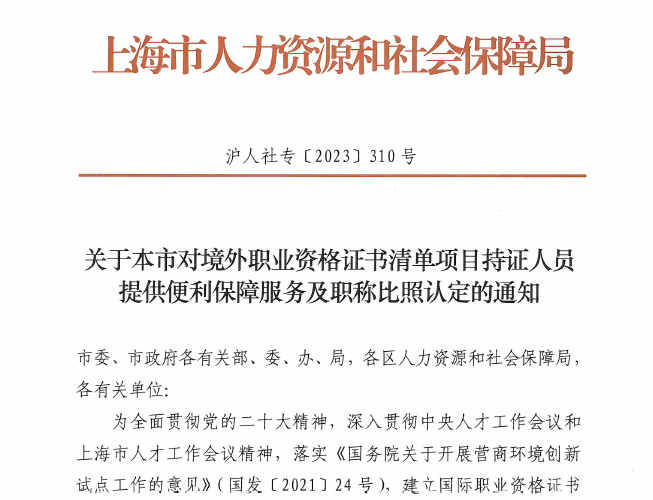
最新消息!FCCA及ACCA证书双双入选《上海市境外职业资格证书认可清单》 2023-10-20
-
昆士兰大学在校可以考acca吗?24年报读必看! 2023-10-18

-
澳大利亚国立大学在校可以考acca吗?报考详情一览! 2023-10-18

-
acca和国内注册会计师对比哪个难?一文解答! 2023-10-16

-
24年会计专业acca考试考什么?一篇文章揭晓! 2023-10-16

-
ACCA加速科目有哪些?最多可以免几科? 2023-10-16

-
澳洲悉尼ACCA加速计划是什么?留学生看过来! 2023-10-16

-
墨尔本大学ACCA加速计划是什么?一篇文章解答! 2023-10-16

-
澳洲ACCA免考是怎么规定的?详情解答一览! 2023-10-16
-
几月报考acca比较好?学姐解答! 2023-10-14

-
关于acca的详细解答,一篇文章介绍! 2023-10-13
-
报名acca都在几月?学姐解答! 2023-10-13

-
acca知识科普,新手不要错过! 2023-10-13





-
acca知识科普,新手不要错过! 2023-10-13
-
acca新手必备科普文,看这篇就够了! 2023-10-13

-
澳洲ACCA悉大加速计划攻略,考生速看! 2023-10-13
-
墨尔本大学ACCA加速计划详解,准备报考ACCA的考生速看! 2023-10-13
-
ACCA缺考有什么影响?一起来看! 2023-10-13
-
要不要报考ACCA?常见问题答疑! 2023-10-13

-
澳洲ACCA就业前景怎么样?附ACCA课程介绍! 2023-10-12
-
深度对比ACCA和CPA证书,一篇看懂! 2023-10-12
-
ACCA考试有多难?考点全面分析! 2023-10-12
-
ACCA49分有救吗?关于成绩复议一篇说透! 2023-10-12

-
进入会计师事务所应该具备哪些条件?一起来看! 2023-10-12

-
金融行业必考证书一览!你在备考哪一个? 2023-10-12

-
ACCA加速计划详解,附申请流程! 2023-10-12

-
ACCA PM备考经验分享,努力的人一定会得到一颗糖 2023-10-03
-
如何做到ACCA F阶段平均分83分?经验分享! 2023-10-02