更多服务
更多服务

 报名条件
报名条件
 报名时间
报名时间
 报名费用
报名费用
 免试条件
免试条件
 报名入口
报名入口
 报名流程
报名流程
 报名简章
报名简章
 考试科目
考试科目
 准考证打印
准考证打印
 考试时间
考试时间
 免考政策
免考政策
 机考介绍
机考介绍
 学位介绍
学位介绍
 就业前景
就业前景
 政策福利
政策福利
 考试费用
考试费用
 难度分析
难度分析
 ACCA教材
 国内考点
国内考点
 薪资待遇
薪资待遇
 时间限制
时间限制
 考试教材
考试教材







2015年ACCA考试F8&P7考官文章更新
来源:
高顿网校
2015-08-18
An important part of an external audit is the consideration by the auditor as to whether the client has complied with laws and regulations.
It is important that candidates preparing for F8, Audit and Assurance and P7, Advanced Audit and Assurance have an understanding of how laws and regulations affect an audit, not only in terms of the work the auditor is required to do, but also to appreciate the responsibilities of both management and the auditor where laws and regulations are concerned.
The auditing standard that is relevant to this article is ISA 250, Consideration of Laws and Regulations in an Audit of Financial Statements, and the objectives of the auditor according to paragraph 10 in ISA 250 are:
to obtain sufficient appropriate audit evidence regarding compliance with the provisions of those laws and regulations that have a direct effect on the determination of material amounts and disclosures in the financial statements
to perform specified audit procedures to help identify non-compliance with other laws and regulations that may have a material effect on the financial statements
to respond appropriately to non-compliance or suspected non-compliance identified during the audit.
The standard defines an act of ‘non-compliance’ as follows:
‘Acts of omission or commission by the entity, either intentional or unintentional, which are contrary to the prevailing laws or regulations. Such acts include transactions entered into by, or in the name of, the entity, or on its behalf, by those charged with governance, management or employees. Non-compliance does not include personal misconduct (unrelated to the business activities of the entity) by those charged with governance, management or employees of the entity.’
Respective responsibilities of management and auditors
Candidates need to go into the exam with an understanding as to who is responsible for compliance with laws and regulations and who is responsible for the detection of non-compliance with laws and regulations.
It is the responsibility of management to ensure that an entity complies with relevant laws and regulations. It is not the responsibility of the auditor to either prevent or detect non-compliance.
Question 1(c) of the December 2011 F8 exam for four marks required candidates to:
‘Explain the responsibilities of management and auditors of Chuck Industries Co in relation to compliance with laws and regulations under ISA 250, Consideration of Laws and Regulations in an Audit of Financial Statements.’
The question itself was linked to a brief scenario where Chuck Industries Co had received a visit from the tax authority who had discovered incorrect levels of tax had been deducted from the payroll as tax rates had not been updated in the previous year and the finance director was questioning the audit firm as to why they had not identified this non-compliance with tax legislation.
To secure a pass in this part of the question, candidates would have had to:
understand that it is role of the management of Chuck Industries Co to ensure the operations of the entity are conducted in accordance with laws and regulations (this applies to tax legislation also)
appreciate that an auditor is not responsible for prevention of non-compliance with laws and regulations and is not expected to detect instances of non-compliance acknowledge in the answer that it is the auditor’s responsibility to obtain reasonable assurance that the financial statements are free from material misstatement.
To that end the auditor will take into account the legal and regulatory framework within which the entity operates make reference to the auditor’s responsibility to consider those laws and regulations that have both a direct and an indirect effect on the determination of material amounts and disclosures in the financial statements.
Direct and indirect laws and regulations
There are many laws and regulations that a reporting entity may have to comply with in order to continue in business. For example, many entities (particularly in the UK) will have to comply with strict health and safety legislation; a food manufacturer may have strict food hygiene legislation to comply with, and an accountancy firm will have a code of ethics to follow from its professional body. Such laws and regulations will have both a direct effect on the financial statements and an indirect effect.
For those laws and regulations that have a direct effect on the financial statements, the auditor will be concerned about gathering sufficient and appropriate audit evidence that the entity has complied with such laws and regulations. For example, when auditing the payroll the auditor will be concerned with gathering sufficient and appropriate audit evidence to ensure that tax legislation has been correctly applied by the entity because if it has not (as in Question 1(c) in the December 2011 F8 exam), there is risk that the entity could be fined for non-compliance and the fines could be material, either in isolation or when aggregated with other misstatements. In addition, amounts within the financial statements may also be misstated as a result of the non-compliance with laws and regulations.
For those laws and regulations that have an indirect effect on the financial statements, the auditor will undertake procedures with the objective of identifying non-compliance with such laws and regulations. ISA 250 gives examples in paragraph 6(b) of:
compliance with the terms of an operating license
compliance with regulatory solvency requirements, or
compliance with environmental regulations.
When designing procedures to help to identify non-compliance with laws and regulations, ISA 315, Identifying and Assessing the Risks of Material Misstatement through Understanding the Entity and Its Environment requires an auditor to obtain a general understanding of:
the applicable legal and regulatory framework, and how the entity complies with that framework.
Identifying non-compliance with laws and regulations can be tricky for auditors, particularly where fraud and/or money laundering is concerned (see later in the article). It is for this reason that the auditor must maintain a degree of professional scepticism and remain alert to the possibility that other audit procedures applied may bring instances of non-compliance or suspected non-compliance with laws and regulations to the auditor’s attention, and such procedures could include:
reading minutes of board meetings
enquiring of management and/or legal advisers concerning litigation or claims brought against the entity, and
undertaking substantive tests on classes of transactions, account balances or disclosures.
Reporting identified or suspected non-compliance with laws and regulations
Where the auditor discovers non-compliance with laws and regulations, the auditor must notify those charged with governance. However, care must be taken by the auditor because if the auditor suspects that those charged with governance are involved, the auditor must then communicate with the next highest level of authority, which may include the audit committee. If a higher level of authority does not exist, the auditor will then consider the need to obtain legal advice.
The auditor must also consider whether the non-compliance has a material effect on the financial statements and, in turn, the impact the non-compliance will have on their report.
There may be occasions when the auditor’s duty of confidentiality may be overridden by law or statute. This can be the case when the auditor discovers non-compliance with legislation such as drug trafficking or money laundering.
Money laundering
The Study Guide to P7 covers the issue of money laundering separately to that of laws and regulations in A2(a) to (h). ACCA’s Code of Ethics and Conduct defines ‘money laundering’ as:
‘...the process by which criminals attempt to conceal the true origin and ownership of the proceeds of their criminal activity, allowing them to maintain control over the proceeds and, ultimately, providing a legitimate cover for their sources of income.’
Auditors need to be particularly careful where money laundering issues are concerned – especially for a business that is predominantly cash-based because the scope for money laundering in such businesses is wide. There are usually three stages in money laundering:
Placement – which is the introduction or ‘placement’ of illegal funds into a financial system.
Layering – which is where the money is passed through a large number of transactions. This is done so that it makes it difficult to trace the money to its original source.
Integration – which is where the ‘dirty’ money becomes ‘clean’ as it passes back into a legitimate economy.
Money laundering offences can include:
concealing criminal property
acquiring, using or possessing criminal property
becoming involved in arrangement which is known, or suspected, of facilitating the acquisition of criminal property.
There are many countries in which money laundering is a criminal offence and, where an accountant or an auditor discovers a situation which may give rise to money laundering, the accountant or auditor must report such suspicions to a ‘money laundering reporting officer’ (MLRO) whose responsibility it is to report such suspicions to an enforcement agency (in the UK, this enforcement agency is the National Crime Agency (NCA)).
It is an offence to fail to report suspicions of money laundering to NCA or the MLRO as soon as practicable, and it is also an offence if the MLRO fails to pass on a report to the NCA. Where the entity is actively involved in money laundering, the signs are likely to be similar to those where there is a risk of fraud, and can include:
complex corporate structure where complexity does not seem to be warranted
transactions not in the ordinary course of business
many large cash transactions when not expected
transactions where there is a lack of information or explanations, or where explanations are unsatisfactory, or
transactions with little commercial logic taking place in the normal course of business.
Question 3(a) in the June 2012 P7 exam gave candidates a scenario where they were placed in the position of audit manager. The audit senior had noted discrepancies in the revenue figure for a cash-based business and the financial controller had refused to offer any explanation for the discrepancy. Further, a payment of $2m had been transferred to an overseas institution and, upon being questioned about this transaction by the audit senior, the owner (who had authorised the transaction) became aggressive.
This particular question in the June 2012 P7 exam did not make reference to the term ‘money laundering’ anywhere in the scenario or in the question requirement; the question required the candidate to consider any reporting requirements that should take place by the audit senior.
The fact that no mention of money laundering was made either in the scenario or in the question requirements is reflective of the fact that in real life those committing money laundering will not openly admit to committing such offences. Money laundering is therefore very similar (if not identical in many ways) to fraud and, therefore, auditors should set aside any beliefs concerning the integrity and honesty of the audit client and keep a sceptical mindset where such issues are concerned.
Tipping off
The term ‘tipping off’ means that the MLRO discloses something that will prejudice an investigation. It is an offence to make the perpetrators of money laundering aware that the auditor has suspicions or knowledge regarding their money laundering activities or that these suspicions or knowledge have been reported. It is unnecessary for the auditor to gain all the facts, or to ascertain without a doubt, that an offence has occurred. The auditor only needs to satisfy themselves that their suspicions are reasonable, and obtain sufficient evidence to show the allegations are made in good faith.
Conclusion
Candidates attempting F8 and P7 are advised to gain a sound understanding of laws and regulations, not only in the context of the Syllabus and Study Guide but also in the context of real-life situations to allow for greater application of knowledge.
In addition, P7 candidates are encouraged to read ACCA’s Technical Factsheet 145, Anti-money laundering for the accounting sector (see 'Related links') and keep in mind the fact that questions in P7 will not always flag up that candidates need to consider laws and regulations; the challenging nature of P7 will mean that candidates will have to conclude for themselves that questions are testing a specific subject area of the syllabus.
高顿网校温馨提醒
各位考生,2015年ACCA备考已经开始,为了方便各位学员能更加系统地掌握考试大纲的重点知识,帮助大家充分备考,体验实战,高顿网校开通了全免费的ACCA题库(包括精题真题和全真模考系统),题库里附有详细的答案解析,学员可以通过多种题型加强练习。戳这里进入ACCA免费题库>>>
| ACCA网络课程 | 课程专业名称 | 讲师 | 试听 |
 85%的人正在学习该课程 85%的人正在学习该课程 | ACCA 全维度网课体验课程 实景课堂与独立录制 覆盖所有知识点,根据学习计划推进学习进度 | 高顿名师 |  |
 70%的人正在学习该课程 70%的人正在学习该课程 | ACCA网课全科卡(8.2折) 为零基础刚开始学习ACCA的学员特别定制 | 高顿名师 | |
精彩推荐:
版权声明:本条内容自发布之日起,有效期为一个月。凡本网站注明“来源高顿教育”或“来源高顿网校”或“来源高顿”的所有作品,均为本网站合法拥有版权的作品,未经本网站授权,任何媒体、网站、个人不得转载、链接、转帖或以其他方式使用。
经本网站合法授权的,应在授权范围内使用,且使用时必须注明“来源高顿教育”或“来源高顿网校”或“来源高顿”,并不得对作品中出现的“高顿”字样进行删减、替换等。违反上述声明者,本网站将依法追究其法律责任。
本网站的部分资料转载自互联网,均尽力标明作者和出处。本网站转载的目的在于传递更多信息,并不意味着赞同其观点或证实其描述,本网站不对其真实性负责。
如您认为本网站刊载作品涉及版权等问题,请与本网站联系(邮箱fawu@gaodun.com,电话:021-31587497),本网站核实确认后会尽快予以处理。

点一下领资料

【整理版】ACCA各科目历年真题
真题高频考点,刷题全靠这份资料
下载合集

acca全科学习思维导图
梳理核心考点,一图看懂全部章节
下载合集

2023年acca考纲解析
覆盖科目重难点,备考按照计划走
下载合集


acca备考 热门问题解答
- acca考试怎么搭配科目?
-
建议优先选择相关联的科目进行搭配报考,这样可以提高备考效率,减轻备考压力,1、F1-F4:为随时机考科目,难度较低,这里可以自行随意选择考试顺序。2、F5-F9:如果你的工作的和财务会计或者审计有关、或者你比较擅长财务和审计的话,推荐先考F7和F8。你可以选择一起考ACCA考试科目F7和F8或者先考F7(8)再考F8(7),这就要取决你一次想考几门。3、P阶段:选修科目中,建议企业首选AFM!第二部分科目进行选择,如果AA和SBR掌握学生更好,可以通过选择AAA,如果SBL掌握的好,可以自己选择APM。
- acca一共几门几年考完?
-
acca一共有15门考试科目,其中有必修科目和选修科目,考生需要考完13门科目才能拿下证书。
- acca一年考几次?
-
acca一年有4次考试,分别是3月、6月、9月和12月,分季机考科目是采取的这类四个考季的模式,而随时机考则是没有这方面的时间规定限制,可以随报随考。
- acca的含金量如何?
-
ACCA证书的含金量是比较高的,从就业、能力提升、全球认可等角度来说,都是比较有优势的证书,其含金量主要表现在以下几个方面:1、国际化,认可度高;2、岗位多,就业前景好;3、缺口大,人才激励。
严选名师 全流程服务
Sdanvi
高顿ACCA全学科负责人
- 教学特色
- 自创“少女三大法则”和“二阶学习法”
- 教学资历
- 两年内高分通过ACCA考试,ACCA业界学霸型讲师
- 客户评价
- 帮助学生快速理解ACCA的知识点,是ACCA学习不可错过的宝藏博主

马上提问
- 老师好,考出ACCA的难度相当于考进什么大学?
- 老师好,ACCA考试怎样备考(越详细越好)?
- 老师好,38岁才开始考ACCA会不会太迟?
- 老师好,ACCA通过率是多少?
- 老师好,有了ACCA证后好找工作吗?
999+人提问
Perry
高顿acca明星讲师
- 学历背景
- 复旦-麻省理工国际工商管理硕士
- 教学资历
- 曾就职于四大、世界500强
- 客户评价
- ACCA业界学霸型讲师

马上提问
- 老师好,acca如果不去考会怎么样?
- 老师好,acca难度有多大?
- 老师好,acca一年可以考多少门?
- 老师好,acca考试科目几年考完?
- 老师好,acca工资一般是多少钱?
999+人提问
Dora
高顿acca明星讲师
- 学历背景
- 英国布里斯托优秀硕士生
- 教学资历
- 多年普华永道金融组审计师经验
- 客户评价
- 知性又美丽,温柔大姐姐

马上提问
- 老师好,acca持证工资待遇如何?
- 老师好,35岁考acca有意义吗?
- 老师好,考过acca能干嘛?
- 老师好,考完acca可以做什么工作?
- 老师好,acca年薪一般多少?
999+人提问
其他人还搜了
热门推荐
-
ACCA考试查询免考的方法是什么?ACCA免考条件是怎么要求的? 2023-10-30

-
ACCA科目一共有几门?ACCA从备考到拿证需要多长时间? 2023-10-30

-
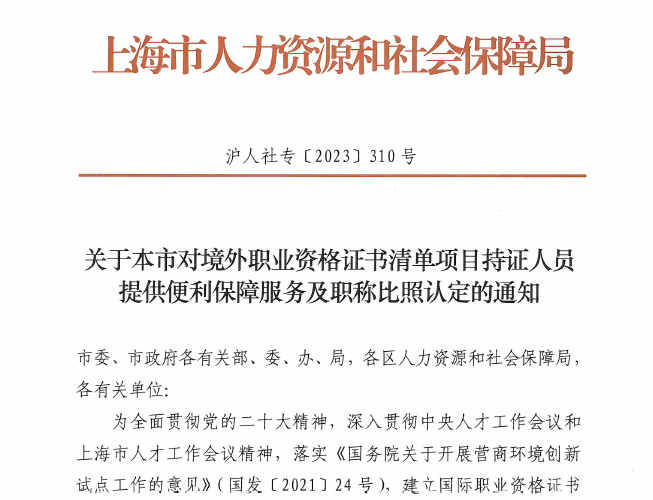
最新消息!FCCA及ACCA证书双双入选《上海市境外职业资格证书认可清单》 2023-10-20
-
昆士兰大学在校可以考acca吗?24年报读必看! 2023-10-18

-
澳大利亚国立大学在校可以考acca吗?报考详情一览! 2023-10-18

-
acca和国内注册会计师对比哪个难?一文解答! 2023-10-16

-
24年会计专业acca考试考什么?一篇文章揭晓! 2023-10-16

-
ACCA加速科目有哪些?最多可以免几科? 2023-10-16

-
澳洲悉尼ACCA加速计划是什么?留学生看过来! 2023-10-16

-
墨尔本大学ACCA加速计划是什么?一篇文章解答! 2023-10-16

-
澳洲ACCA免考是怎么规定的?详情解答一览! 2023-10-16

-
几月报考acca比较好?学姐解答! 2023-10-14

-
关于acca的详细解答,一篇文章介绍! 2023-10-13

-
报名acca都在几月?学姐解答! 2023-10-13

-
acca知识科普,新手不要错过! 2023-10-13





-
acca知识科普,新手不要错过! 2023-10-13
-
acca新手必备科普文,看这篇就够了! 2023-10-13

-
澳洲ACCA悉大加速计划攻略,考生速看! 2023-10-13

-
墨尔本大学ACCA加速计划详解,准备报考ACCA的考生速看! 2023-10-13

-
ACCA缺考有什么影响?一起来看! 2023-10-13

-
要不要报考ACCA?常见问题答疑! 2023-10-13

-
澳洲ACCA就业前景怎么样?附ACCA课程介绍! 2023-10-12

-
深度对比ACCA和CPA证书,一篇看懂! 2023-10-12

-
ACCA考试有多难?考点全面分析! 2023-10-12

-
ACCA49分有救吗?关于成绩复议一篇说透! 2023-10-12

-
进入会计师事务所应该具备哪些条件?一起来看! 2023-10-12

-
金融行业必考证书一览!你在备考哪一个? 2023-10-12

-
ACCA加速计划详解,附申请流程! 2023-10-12

-
ACCA PM备考经验分享,努力的人一定会得到一颗糖 2023-10-03
-
如何做到ACCA F阶段平均分83分?经验分享! 2023-10-02