更多服务
更多服务

 报名条件
报名条件
 报名时间
报名时间
 报名费用
报名费用
 免试条件
免试条件
 报名入口
报名入口
 报名流程
报名流程
 报名简章
报名简章
 考试科目
考试科目
 准考证打印
准考证打印
 考试时间
考试时间
 免考政策
免考政策
 机考介绍
机考介绍
 学位介绍
学位介绍
 就业前景
就业前景
 政策福利
政策福利
 考试费用
考试费用
 难度分析
难度分析
 ACCA教材
 国内考点
国内考点
 薪资待遇
薪资待遇
 时间限制
时间限制
 考试教材
考试教材







ACCA(INT)*7考试部分内容变化
来源:
高顿网校
2015-12-07
IFRS 15 Revenue from Contracts with Customers
1. Principles of Revenue Recognition
1.1 IFRS 15
IFRS 15 Revenue from Contracts with Customers outlines the five steps of the revenue recognition process:
Step 1 Identify the contract(s) with the customer
Step 2 Identify the separate performance obligations
Step 3 Determine the transaction price
Step 4 Allocate the transaction price to the performance obligations
Step 5 Recognise revenue when (or as) a performance obligation is satisfied
The core principle of IFRS 15 is that an entity recognizes revenue from the transfer of goods or services to a customer in an amount that reflects the consideration that the entity expects to be entitled to in exchange for the goods or services.
1.2 Identify Contracts With Customers Def inition:
Contract— an agreement between two or more parties that creates enforceable rights and obligations.
Contracts can be written, verbal or implied based on an entity's customary business practices.
Customer— a party that has contracted with an entity to obtain goods or services that are an output of the entity's ordinary activities in exchange for consideration.
The revenue recognition principles of IFRS 15 apply only when a contract meets all of the following criteria:*
*the parties to the contract have approved the contract;
*the entity can identify each party's rights regarding the goods or services in the contract;
*the payment terms can be identified;
*the contract has commercial substance; and*
*it is probable that the entity will collect the consideration due under the contract.*
1.3 Identify Performance Obligations
Performance obligation— a promise to transfer to a customer:
*a good or service (or bundle of goods or services) that is distinct; or
*a series of goods or services that are substantially the same and are transferred in the same way.
If a promise to transfer a good or service is not distinct from other goods and services in a contract, then the goods or services are combined into a single performance obligation.
A good or service is distinct if both of the following criteria are met:
1. The customer can benefit from the good or service on its own or when combined with the customer's available resources; and
2. The promise to transfer the good or service is separately identifiable from other goods or services in the contract.*
*A transfer of a good or service is separately identifiable if the good or service:
*is not integrated with other goods or services in the contract;
*does not modify or customise another good or service in the contract; or
*does not depend on or relate to other goods or services promised in the contract.
1.4 Determine the Transaction Price
Transaction price— the amount of consideration to which an entity is entitled in exchange for transferringgoods or services.
The transfer price does not include amounts collected for third parties (i.e. sales taxes or VAT).
The effects of the following must be considered when determining the transaction price:
*the time value of money;*
*the fair value of any non-cash consideration;
*estimates of variable consideration;
*consideration payable to the customer.*
Consideration payable to the customer is treated as a reduction in the transaction price unless the payment is for goods or services received from the customer.
1.5 Allocate the Transaction Price
The transaction price is allocated to all separate performance obligations in proportion to thestand-alone selling price of the goods or services.
Definition
Stand-alone selling price— the price at which an entity would sell a promised good or service separately to a customer
*The best evidence of stand-alone selling price is the observable price of a good or service whenit is sold separately.
*The stand-alone selling price should be estimated if it is not observable.
The allocation is made at the beginning of the contract and is not adjusted for subsequent changes in the stand-alone selling prices of the goods or services.
1.6 Recognise Revenue
*Recognise revenue when (or as) a performance obligation is satisfied by transferring apromised good or service (an asset) to the customer.
*An asset is transferred when (or as) the customer gains control of the asset.
*The entity must determine whether the performance obligation will be satisfied over time or ata point in time.
2. Performance Obligations
2.1 Satisfied Over Time
*A performance obligation is satisfied over time if one of the following criteria is met:
*The customer receives and consumes the benefits of the entity's performance as the entity performs (e.g. service contracts, such as a cleaning service or a monthly payroll processing service).
*The entity's performance creates or enhances an asset that the customer controls as the asset is created or enhanced (e.g. a work-in-process asset).
*The entity's performance does not create an asset with an alternative use to the entity and the entity has an enforceable right to payment for performance completed to date.
*Revenue is recognised over time by measuring progress towards complete satisfaction of the performance obligation.
*Output methods and input methods (described in s.3) can be used to measure progress towards completion.*
*Revenue for a performance obligation satisfied over time can only be recognised if the entity can make a reasonable estimate of progress.
*Revenue is recognised to the extent of costs incurred if there is no reasonable estimate of progress, but the entity expects to recover its costs.
2.2 Satisfied at a Point in Time
*A performance obligation that is not satisfied over time is satisfied at a point in time.
*Revenue should be recognised at the point in time when the customer obtains control of the asset.
*Indicators of the transfer of control include:
*the customer has an obligation to pay for an asset;
*the customer has legal title to the asset;
*the entity has transferred physical possession of the asset;
*the customer has the significant risks and rewards of ownership;
*the customer has accepted the asset.
2.3 Statement of Financial Position Presentation
*A contract asset or contract liability should be presented in the statement of financial position when either party has performed in a contract.
Definition:
Contract liability— an entity's obligation to transfer goods or services to a customer for which the entity has received consideration from the customer or consideration is due from the customer (i.e. the customer pays or owes payment before the entity performs).
Contract asset— an entity's right to consideration in exchange for goods or services that the entity has transferred to the customer (i.e. the entity performs before the customer pays).
*In addition, any unconditional right to consideration should be presented separately as areceivable in accordance with IFRS 9 Financial Instruments.*
高顿网校温馨提醒
各位考生,2016年ACCA备考已经开始,为了方便各位学员能更加系统地掌握考试大纲的重点知识,帮助大家充分备考,体验实战,高顿网校开通了全免费的ACCA题库(包括精题真题和全真模考系统),题库里附有详细的答案解析,学员可以通过多种题型加强练习。戳这里进入ACCA免费题库>>>

微信扫一扫,关注ACCA*7资讯,满满的干货喂饱你!ACCA微信公众号:gaodunaccaACCA分享与交流QQ群:227573128

精彩推荐:
版权声明:本条内容自发布之日起,有效期为一个月。凡本网站注明“来源高顿教育”或“来源高顿网校”或“来源高顿”的所有作品,均为本网站合法拥有版权的作品,未经本网站授权,任何媒体、网站、个人不得转载、链接、转帖或以其他方式使用。
经本网站合法授权的,应在授权范围内使用,且使用时必须注明“来源高顿教育”或“来源高顿网校”或“来源高顿”,并不得对作品中出现的“高顿”字样进行删减、替换等。违反上述声明者,本网站将依法追究其法律责任。
本网站的部分资料转载自互联网,均尽力标明作者和出处。本网站转载的目的在于传递更多信息,并不意味着赞同其观点或证实其描述,本网站不对其真实性负责。
如您认为本网站刊载作品涉及版权等问题,请与本网站联系(邮箱fawu@gaodun.com,电话:021-31587497),本网站核实确认后会尽快予以处理。

点一下领资料

【整理版】ACCA各科目历年真题
真题高频考点,刷题全靠这份资料
下载合集

acca全科学习思维导图
梳理核心考点,一图看懂全部章节
下载合集

2023年acca考纲解析
覆盖科目重难点,备考按照计划走
下载合集


acca备考 热门问题解答
- acca考试怎么搭配科目?
-
建议优先选择相关联的科目进行搭配报考,这样可以提高备考效率,减轻备考压力,1、F1-F4:为随时机考科目,难度较低,这里可以自行随意选择考试顺序。2、F5-F9:如果你的工作的和财务会计或者审计有关、或者你比较擅长财务和审计的话,推荐先考F7和F8。你可以选择一起考ACCA考试科目F7和F8或者先考F7(8)再考F8(7),这就要取决你一次想考几门。3、P阶段:选修科目中,建议企业首选AFM!第二部分科目进行选择,如果AA和SBR掌握学生更好,可以通过选择AAA,如果SBL掌握的好,可以自己选择APM。
- acca一共几门几年考完?
-
acca一共有15门考试科目,其中有必修科目和选修科目,考生需要考完13门科目才能拿下证书。
- acca一年考几次?
-
acca一年有4次考试,分别是3月、6月、9月和12月,分季机考科目是采取的这类四个考季的模式,而随时机考则是没有这方面的时间规定限制,可以随报随考。
- acca的含金量如何?
-
ACCA证书的含金量是比较高的,从就业、能力提升、全球认可等角度来说,都是比较有优势的证书,其含金量主要表现在以下几个方面:1、国际化,认可度高;2、岗位多,就业前景好;3、缺口大,人才激励。
严选名师 全流程服务
Sdanvi
高顿ACCA全学科负责人
- 教学特色
- 自创“少女三大法则”和“二阶学习法”
- 教学资历
- 两年内高分通过ACCA考试,ACCA业界学霸型讲师
- 客户评价
- 帮助学生快速理解ACCA的知识点,是ACCA学习不可错过的宝藏博主

马上提问
- 老师好,考出ACCA的难度相当于考进什么大学?
- 老师好,ACCA考试怎样备考(越详细越好)?
- 老师好,38岁才开始考ACCA会不会太迟?
- 老师好,ACCA通过率是多少?
- 老师好,有了ACCA证后好找工作吗?
999+人提问
Perry
高顿acca明星讲师
- 学历背景
- 复旦-麻省理工国际工商管理硕士
- 教学资历
- 曾就职于四大、世界500强
- 客户评价
- ACCA业界学霸型讲师

马上提问
- 老师好,acca如果不去考会怎么样?
- 老师好,acca难度有多大?
- 老师好,acca一年可以考多少门?
- 老师好,acca考试科目几年考完?
- 老师好,acca工资一般是多少钱?
999+人提问
Dora
高顿acca明星讲师
- 学历背景
- 英国布里斯托优秀硕士生
- 教学资历
- 多年普华永道金融组审计师经验
- 客户评价
- 知性又美丽,温柔大姐姐

马上提问
- 老师好,acca持证工资待遇如何?
- 老师好,35岁考acca有意义吗?
- 老师好,考过acca能干嘛?
- 老师好,考完acca可以做什么工作?
- 老师好,acca年薪一般多少?
999+人提问
其他人还搜了
热门推荐
-
ACCA考试查询免考的方法是什么?ACCA免考条件是怎么要求的? 2023-10-30
-
ACCA科目一共有几门?ACCA从备考到拿证需要多长时间? 2023-10-30
-
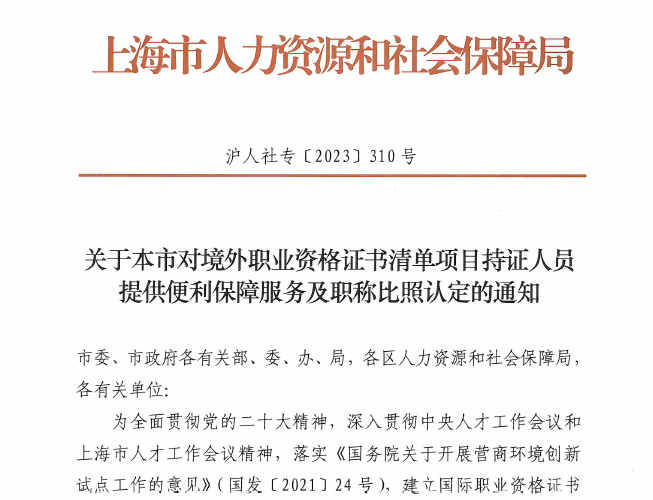
最新消息!FCCA及ACCA证书双双入选《上海市境外职业资格证书认可清单》 2023-10-20
-
昆士兰大学在校可以考acca吗?24年报读必看! 2023-10-18
-
澳大利亚国立大学在校可以考acca吗?报考详情一览! 2023-10-18

-
acca和国内注册会计师对比哪个难?一文解答! 2023-10-16
-
24年会计专业acca考试考什么?一篇文章揭晓! 2023-10-16
-
ACCA加速科目有哪些?最多可以免几科? 2023-10-16

-
澳洲悉尼ACCA加速计划是什么?留学生看过来! 2023-10-16
-
墨尔本大学ACCA加速计划是什么?一篇文章解答! 2023-10-16

-
澳洲ACCA免考是怎么规定的?详情解答一览! 2023-10-16
-
几月报考acca比较好?学姐解答! 2023-10-14
-
关于acca的详细解答,一篇文章介绍! 2023-10-13
-
报名acca都在几月?学姐解答! 2023-10-13
-
acca知识科普,新手不要错过! 2023-10-13





-
acca知识科普,新手不要错过! 2023-10-13
-
acca新手必备科普文,看这篇就够了! 2023-10-13

-
澳洲ACCA悉大加速计划攻略,考生速看! 2023-10-13
-
墨尔本大学ACCA加速计划详解,准备报考ACCA的考生速看! 2023-10-13
-
ACCA缺考有什么影响?一起来看! 2023-10-13
-
要不要报考ACCA?常见问题答疑! 2023-10-13
-
澳洲ACCA就业前景怎么样?附ACCA课程介绍! 2023-10-12
-
深度对比ACCA和CPA证书,一篇看懂! 2023-10-12
-
ACCA考试有多难?考点全面分析! 2023-10-12
-
ACCA49分有救吗?关于成绩复议一篇说透! 2023-10-12

-
进入会计师事务所应该具备哪些条件?一起来看! 2023-10-12

-
金融行业必考证书一览!你在备考哪一个? 2023-10-12

-
ACCA加速计划详解,附申请流程! 2023-10-12
-
ACCA PM备考经验分享,努力的人一定会得到一颗糖 2023-10-03
-
如何做到ACCA F阶段平均分83分?经验分享! 2023-10-02