更多服务
更多服务

 报名条件
报名条件
 报名时间
报名时间
 报名费用
报名费用
 免试条件
免试条件
 报名入口
报名入口
 报名流程
报名流程
 报名简章
报名简章
 考试科目
考试科目
 准考证打印
准考证打印
 考试时间
考试时间
 免考政策
免考政策
 机考介绍
机考介绍
 学位介绍
学位介绍
 就业前景
就业前景
 政策福利
政策福利
 考试费用
考试费用
 难度分析
难度分析
 ACCA教材
 国内考点
国内考点
 薪资待遇
薪资待遇
 时间限制
时间限制
 考试教材
考试教材







ACCA讲义:ACCA p2讲义包含哪些知识点?
来源:
高顿网校
2016-04-06

Aim of P2 Corporate Reporting
To apply knowledge, skills and exercise professional judgement in the application and evaluation of financial reporting principles and practices in a range of business contexts and situations.
Syllabus
Main capabilities
1. Discuss the professional and ethical duties of the accountant2. Evaluate the financial reporting framework3. Advise on and report the financial performance of entities4. Prepare the financial statements of groups of entities in accordance with relevant accounting standards5. Explain reporting issues relating to specialised entities6. Discuss the implications of changes in accounting regulation on financial reporting7. Appraise the financial performance and position of entities8. Evaluate current development
Intellectual levels
The syllabus is designed to progressively broaden and deepen theknowledge, skills and professional values demonstrated by thestudents on their way through the qualification.
The specific capabilities within the detailed syllabuses and studyguide are assessed at one of three intellectual or cognitive levels:
Level 1: Knowledge and comprehension
Level 2: Application and analysis
Level 3: Synthesis and evaluation
Very broadly, these intellectual levels relate to the three cognitivelevels at which the Knowledge module, the Skills module and theProfessional level are assessed.
EXAM
Exam format – comprise two sections
Reading & planning time: 15 minutes
Section A – one compulsory case study 50 marksSectionB–choice of 2 from 3 questions 2 x 25 = 50 marks100 marks
Examiner: Graham Holt
Examinable Documents
The documents listed as being examinable are the latest that were issued prior to 30 th September 2010 and will be examinable in June and December 2011 examination sessions.
International Accounting Standards (IASs) / International Financial Reporting Standards (IFRSs)IAS 1 Presentation of Financial StatementsIAS 2 Inventories
IAS 7 Statement of Cash Flows
IAS 8 Accounting Policies, Changes in Accounting Estimates and ErrorsIAS 10 Events after the Reporting Period
IAS 12 Income Taxes
IAS 16 Property, Plant and Equipment
IAS 17 Leases
IAS 18 Revenue
IAS 19 Employee Benefits
IAS 20 Accounting for Government Grants and Disclosure ofGovernment Assistance
IAS 21 The Effects of Changes in Foreign Exchange RatesIAS 23 Borrowing Costs
IAS 24 Related Party Disclosures
IAS 27 Consolidated and Separate Financial StatementsIAS 28 Investments in Associates
IAS 31 Interests in Joint Ventures
IAS 32 Financial Instruments: PresentationIAS 33 Earnings per Share
IAS 34 Interim Financial Reporting
IAS 36 Impairment of Assets
IAS 37 Provisions, Contingent Liabilities and Contingent AssetsIAS 38 Intangible Assets
IAS 39 Financial Instruments: Recognition and MeasurementIAS 40 Investment Property
IFRS 1 First-time Adoption of International Financial ReportingStandards
IFRS 2 Share-based Payment
IFRS 3 Business Combinations
IFRS 5 Non-current Assets Held for Sale and DiscontinuedOperations
IFRS 7 Financial Instruments: DisclosuresIFRS 8 Operating Segments
IFRS 9 Financial Instruments
IFRS For SMEs IFRS for small and medium sized entitiesOther Statements
Framework for the Preparation and Presentation of Financial StatementsEDs, Discussion Papers and Other DocumentsED Simplifying earnings per share: Proposed amendments toIAS 33
ED Improvements to IFRS 5
ED An improved conceptual framework for financial reporting.
Chapters 1 and 2
ED Fair value measurement
ED Management commentary
ED Financial instruments: amortised cost and impairmentED Measurement of liabilities in IAS 37
ED Conceptual framework: the reporting entityED Defined benefit plans
ED Fair value option for financial liabilitiesED Presentation of items in other comprehensive incomeED Leases
ED Insurance contacts
ACCOUNTING STANDARDS
The IASB Framework definition of an asset: a resource controlled by the entity as a result of past events and from which future economic benefits are expected to flow to the entity.
A non-current asset is one intended for use on a continuing basis in the company’s activities, ie it is not intended for resale.
1. IAS 16 Property, plant and equipment
Definitions: Property, plant and equipment; Cost; Residual value; Fair value; Carrying amountAccounting treatment:
-recognition: future economic benefits flow to the entity, -measured reliably. initially measured at cost
. subsequent to initial recognition: cost model and revaluation model. revaluation: increase in value is credited to a revaluation surplus/ decrease is an expenses in P &L after cancelling a previous revaluation surplus. depreciation and revaluations: excess over historical cost depreciation can be transferred to realised earnings through reserves. depreciation of an item does not cease when it becomes temporarily idle or is retired from active use and held for disposal. impairment
-Normally, a revaluation surplus is only realised when the asset is sold, but when it is being depreciated, part of that surplus is being realised as the asset is used. This amount can be transferred to retained (ie realised) earnings but not through profit or loss.
Example 1: Binkie Co has an item of land carried in its books at $13,000. Two years ago a slump in land values led the company to reduce the carrying value from $15,000.
This was taken as an expense in profit or loss (the income statement part of the statement of comprehensive income). There has been a surge in land prices in the current year, however, and the land is now worth $20,000.
Example 2: Let us simply swap round the example given above. The original cost was $15,000, revalued upward to $20,000 two years ago. The value has now fallen to $13,000.
Account for the decrease in value.
2. IAS20 Government grants
Grants related to assets may be presented in the statement of financial position either as deferred income or deducted in arriving at the carrying value of the asset.
Repayment of government grants should be accounted for as a revision of an accounting estimate.
4. IAS 36 Impairment of assets
. IAS36 applies to all tangible, intangible and financial assets except inventories, assets arising from construction contracts, deferred tax assets, assets arising under IAS 19 Employee benefits and financial assets within the scope of IAS 32. Impairment: a fall in the value of an asset so that its recoverable amount is now less than its carrying value in the balance sheet.
.Carrying amount: is the net value at which the asset is included in the statement of financial position (ie after deducting accumulated depreciation and accumulated any impairment losses)The recoverable amount of an asset should be measured as the higher value of:
(a) The asset’s fair value less costs to sell; and(b) Its value in use
The value in use of an asset is measured as the present value of estimated future cash flows (inflows minus outflows) generated by the asset, including its estimated net disposal value (if any) at the end of its expected useful life.
Q3: The Antimony Company acquired its head office on 1 January 20W8 at a cost of $5.0 million (excluding land). Antimony’s policy is to depreciate property on a straight-line basis over 50 years with a zero residual value.
On 31 December 20X2 (after 5 years of ownership) Antimony revalued the non-land element of its head office to $8.0 million. Antimony does not transfer annual amounts out of revaluation reserves as assets are used: this is in accordance with the permitted treatment in IAS 16 Property, plant and equipment.
In January 20X8 localised flooding occurred and the recoverable amount of the non-land element of the head office property fell to $2.9 million.
Required
What impairment charge should be recognized in the profit or loss of Antimony arising from the impairment review in January 20X8 according to IAS 36 Impairment of assets?
Q4:The Acetone Company is testing for impairment two subsidiaries which have been identified as separate cash-generating units.
Some years ago Acetone acquired 80% of The Dushanbe Company for $600,000 when the fair value of Dushanbe’s identifiable assets was $400,000. As Dushanbe’s policy is to distribute all profits by way of dividend, the fair value of its identifiable net assets remained at $400,000 on 31 December 20X7. The impairment review indicated Dushanbe’s recoverable amount at 31 December 20X7 to be $520,000.
Some years ago Acetone acquired 85% of The Maclulich Company for $800,000 when the fair value of Maclulich’s identifiable net assets was $700,000. Goodwill of $205,000 ($800,000-($700,000×85%)) was recognized. As Maclulich’s policy is to distribute all profits by way of dividend, the fair value of its identifiable net assets remained at $700,000 on 31 December 20X7. The impairment review indicated Maclulich’s recoverable amount at 31 December 20X7 to be $660,000.
It is Acetone group policy to value the non-controlling interest using the proportion of net assets method.
Required
Determine the following amounts in respect of Acetone’s consolidated financial statements at 31 December 20X7 according to IAS 36 Impairment of Assets.
(a) The carrying amount of Dushanbe’s assets to be compared with its recoverable amount for impairment testing purposed(b) The carrying amount of goodwill in respect of Dushanbe after the recognition of any impairment loss(c) The carrying amount of the non-controlling interest in Maclulich after recognition of any impairment loss
高顿网校温馨提醒
为了方便各位学员能更加系统地掌握考试大纲的重点知识,帮助大家充分备考,体验实战,高顿网校开通了全免费的ACCA题库(包括精题真题和全真模考系统),题库里附有详细的答案解析,学员可以通过多种题型加强练习。戳这里进入ACCA免费题库>>>

微信扫一扫,关注ACCA*7资讯,满满的干货喂饱你!ACCA微信公众号:gaodunaccaACCA分享与交流QQ群:227573128

精彩推荐:
版权声明:本条内容自发布之日起,有效期为一个月。凡本网站注明“来源高顿教育”或“来源高顿网校”或“来源高顿”的所有作品,均为本网站合法拥有版权的作品,未经本网站授权,任何媒体、网站、个人不得转载、链接、转帖或以其他方式使用。
经本网站合法授权的,应在授权范围内使用,且使用时必须注明“来源高顿教育”或“来源高顿网校”或“来源高顿”,并不得对作品中出现的“高顿”字样进行删减、替换等。违反上述声明者,本网站将依法追究其法律责任。
本网站的部分资料转载自互联网,均尽力标明作者和出处。本网站转载的目的在于传递更多信息,并不意味着赞同其观点或证实其描述,本网站不对其真实性负责。
如您认为本网站刊载作品涉及版权等问题,请与本网站联系(邮箱fawu@gaodun.com,电话:021-31587497),本网站核实确认后会尽快予以处理。

点一下领资料

【整理版】ACCA各科目历年真题
真题高频考点,刷题全靠这份资料
下载合集

acca全科学习思维导图
梳理核心考点,一图看懂全部章节
下载合集

2023年acca考纲解析
覆盖科目重难点,备考按照计划走
下载合集


acca备考 热门问题解答
- acca考试怎么搭配科目?
-
建议优先选择相关联的科目进行搭配报考,这样可以提高备考效率,减轻备考压力,1、F1-F4:为随时机考科目,难度较低,这里可以自行随意选择考试顺序。2、F5-F9:如果你的工作的和财务会计或者审计有关、或者你比较擅长财务和审计的话,推荐先考F7和F8。你可以选择一起考ACCA考试科目F7和F8或者先考F7(8)再考F8(7),这就要取决你一次想考几门。3、P阶段:选修科目中,建议企业首选AFM!第二部分科目进行选择,如果AA和SBR掌握学生更好,可以通过选择AAA,如果SBL掌握的好,可以自己选择APM。
- acca一共几门几年考完?
-
acca一共有15门考试科目,其中有必修科目和选修科目,考生需要考完13门科目才能拿下证书。
- acca一年考几次?
-
acca一年有4次考试,分别是3月、6月、9月和12月,分季机考科目是采取的这类四个考季的模式,而随时机考则是没有这方面的时间规定限制,可以随报随考。
- acca的含金量如何?
-
ACCA证书的含金量是比较高的,从就业、能力提升、全球认可等角度来说,都是比较有优势的证书,其含金量主要表现在以下几个方面:1、国际化,认可度高;2、岗位多,就业前景好;3、缺口大,人才激励。
严选名师 全流程服务
Sdanvi
高顿ACCA全学科负责人
- 教学特色
- 自创“少女三大法则”和“二阶学习法”
- 教学资历
- 两年内高分通过ACCA考试,ACCA业界学霸型讲师
- 客户评价
- 帮助学生快速理解ACCA的知识点,是ACCA学习不可错过的宝藏博主

马上提问
- 老师好,考出ACCA的难度相当于考进什么大学?
- 老师好,ACCA考试怎样备考(越详细越好)?
- 老师好,38岁才开始考ACCA会不会太迟?
- 老师好,ACCA通过率是多少?
- 老师好,有了ACCA证后好找工作吗?
999+人提问
Perry
高顿acca明星讲师
- 学历背景
- 复旦-麻省理工国际工商管理硕士
- 教学资历
- 曾就职于四大、世界500强
- 客户评价
- ACCA业界学霸型讲师

马上提问
- 老师好,acca如果不去考会怎么样?
- 老师好,acca难度有多大?
- 老师好,acca一年可以考多少门?
- 老师好,acca考试科目几年考完?
- 老师好,acca工资一般是多少钱?
999+人提问
Dora
高顿acca明星讲师
- 学历背景
- 英国布里斯托优秀硕士生
- 教学资历
- 多年普华永道金融组审计师经验
- 客户评价
- 知性又美丽,温柔大姐姐

马上提问
- 老师好,acca持证工资待遇如何?
- 老师好,35岁考acca有意义吗?
- 老师好,考过acca能干嘛?
- 老师好,考完acca可以做什么工作?
- 老师好,acca年薪一般多少?
999+人提问
其他人还搜了
热门推荐
-
ACCA考试查询免考的方法是什么?ACCA免考条件是怎么要求的? 2023-10-30

-
ACCA科目一共有几门?ACCA从备考到拿证需要多长时间? 2023-10-30

-
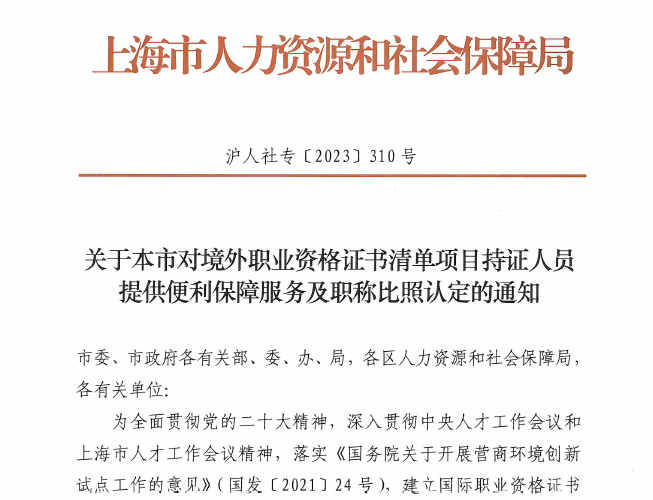
最新消息!FCCA及ACCA证书双双入选《上海市境外职业资格证书认可清单》 2023-10-20
-
昆士兰大学在校可以考acca吗?24年报读必看! 2023-10-18

-
澳大利亚国立大学在校可以考acca吗?报考详情一览! 2023-10-18

-
acca和国内注册会计师对比哪个难?一文解答! 2023-10-16

-
24年会计专业acca考试考什么?一篇文章揭晓! 2023-10-16

-
ACCA加速科目有哪些?最多可以免几科? 2023-10-16

-
澳洲悉尼ACCA加速计划是什么?留学生看过来! 2023-10-16

-
墨尔本大学ACCA加速计划是什么?一篇文章解答! 2023-10-16

-
澳洲ACCA免考是怎么规定的?详情解答一览! 2023-10-16

-
几月报考acca比较好?学姐解答! 2023-10-14

-
关于acca的详细解答,一篇文章介绍! 2023-10-13

-
报名acca都在几月?学姐解答! 2023-10-13

-
acca知识科普,新手不要错过! 2023-10-13





-
acca知识科普,新手不要错过! 2023-10-13
-
acca新手必备科普文,看这篇就够了! 2023-10-13

-
澳洲ACCA悉大加速计划攻略,考生速看! 2023-10-13

-
墨尔本大学ACCA加速计划详解,准备报考ACCA的考生速看! 2023-10-13

-
ACCA缺考有什么影响?一起来看! 2023-10-13

-
要不要报考ACCA?常见问题答疑! 2023-10-13

-
澳洲ACCA就业前景怎么样?附ACCA课程介绍! 2023-10-12

-
深度对比ACCA和CPA证书,一篇看懂! 2023-10-12

-
ACCA考试有多难?考点全面分析! 2023-10-12

-
ACCA49分有救吗?关于成绩复议一篇说透! 2023-10-12

-
进入会计师事务所应该具备哪些条件?一起来看! 2023-10-12

-
金融行业必考证书一览!你在备考哪一个? 2023-10-12

-
ACCA加速计划详解,附申请流程! 2023-10-12

-
ACCA PM备考经验分享,努力的人一定会得到一颗糖 2023-10-03

-
如何做到ACCA F阶段平均分83分?经验分享! 2023-10-02